Last medically reviewed: August 2026
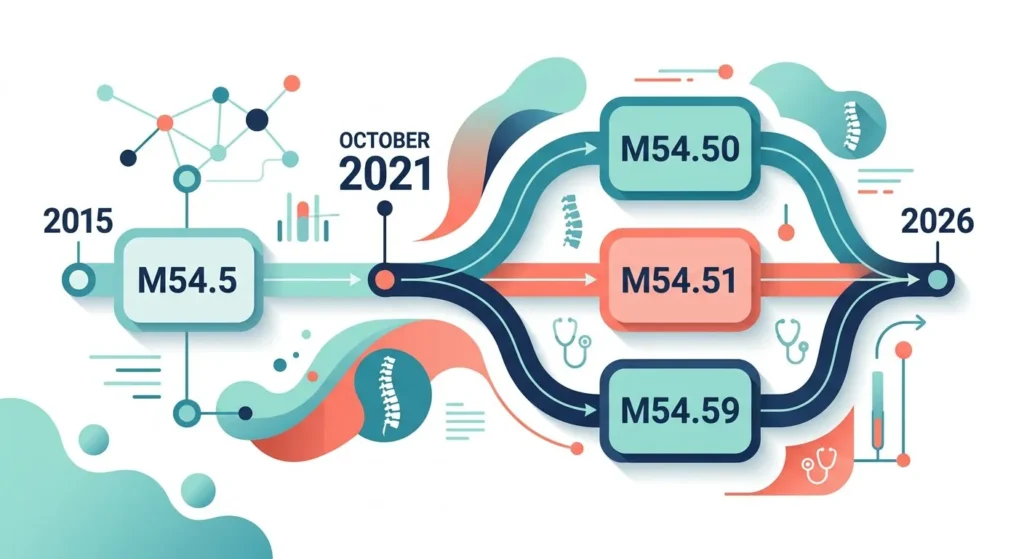
Short answer: M54.5 (low back pain) was retired on October 1, 2021. It’s no longer a valid billing code. In 2026, use M54.50 (unspecified), M54.51 (vertebrogenic), or M54.59 (other low back pain) instead.
Most pages still treat M54.5 as a working code. That’s wrong and it’s costing people claim denials. Let me explain what happened, what the code actually means, and exactly how to code low back pain so you don’t get rejected. I’ll keep it simple. No jargon walls.
Why You’re Still Seeing M54.5 Everywhere
Here’s the honest truth: people type “M54.5” into Google all the time. I do it myself when I’m checking a claim. But the code doesn’t exist anymore on official claims.
CMS retired it on October 1, 2021. It’s a “legacy” code now.
So why does everyone still search for it? Three reasons:
- Old EHR templates still have it saved.
- Old blog posts never got updated.
- People learned it years ago and never heard about the change.
That’s exactly why this article matters. You deserve a straight answer, not a page that repeats outdated info. And if you’re managing a practice’s revenue, this is one of the most common reasons I see clean claims get rejected you can see the full billing fix in our medical billing guide.
What M54.5 Actually Means (In Plain English)
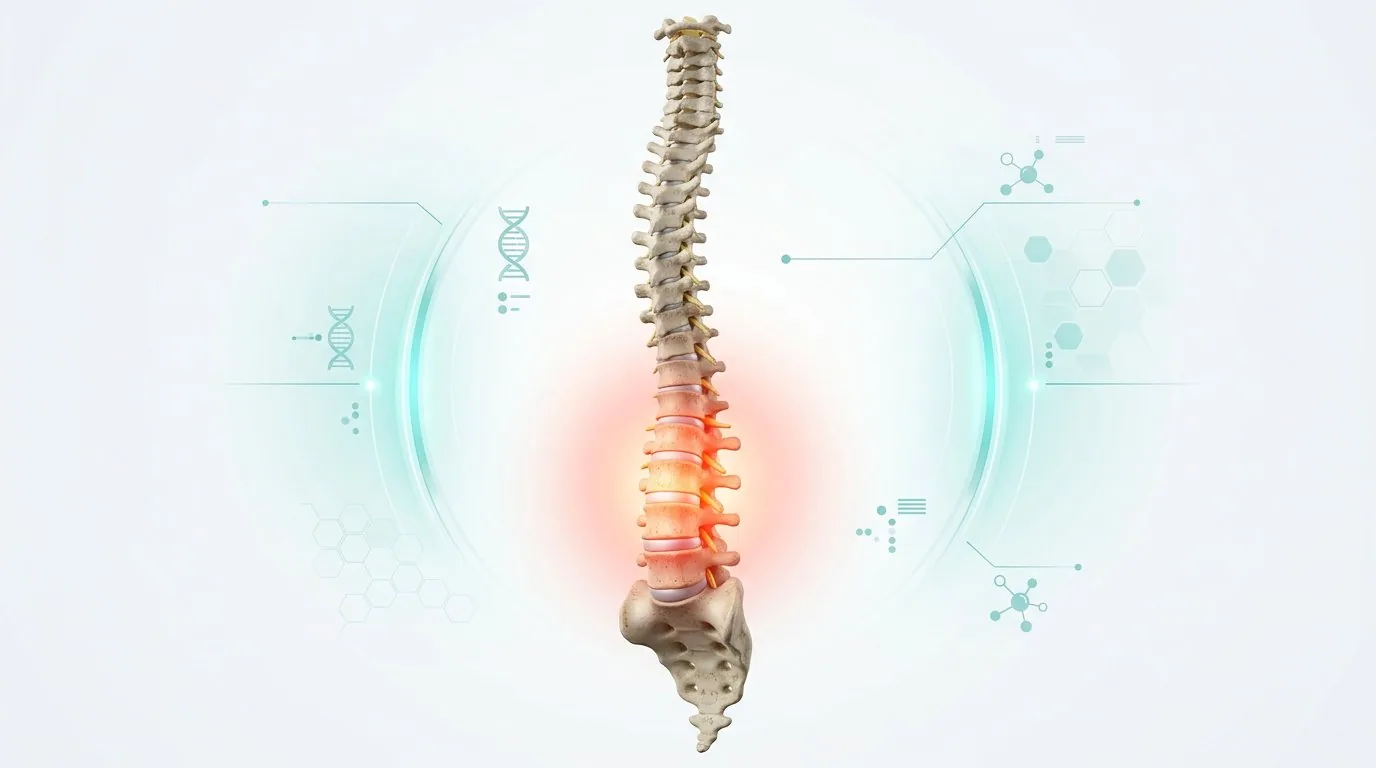
M54.5 stood for low back pain. It was a catch-all code.
It meant pain in the lumbar region the lower part of your back, between the bottom of your ribs and the crease of your buttocks. That’s it.
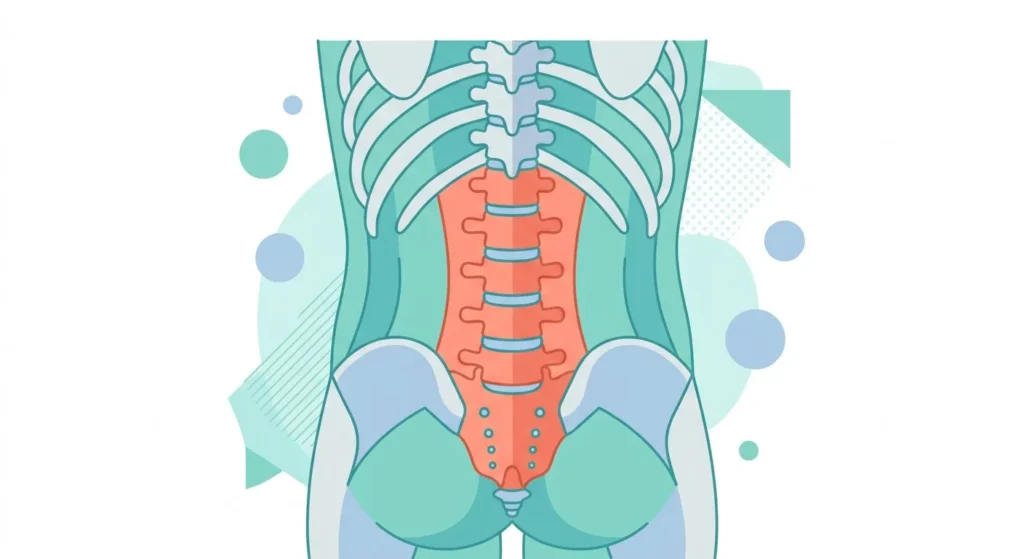
It covered:
- Lumbago (the medical word for low back pain)
- Mechanical low back pain
- Low back pain with no specific cause found
But here’s the important part. M54.5 did not cover everything that hurts your back.
What M54.5 did NOT include:
| Problem | Correct code |
|---|---|
| Low back strain (from lifting or injury) | S39.012 |
| Sciatica / pain down the leg | M54.3, M54.4 |
| Herniated disc | M51.26 / M51.16 |
| Spinal stenosis | M48.06 |
Why does this matter? Because if you code the wrong one, the claim gets denied. It’s that blunt. If your provider documented a low back strain after lifting something heavy, that’s a different code entirely see our low back strain S39.012 guide so you don’t mix them up.
Why M54.5 Was Retired
One catch-all code for every type of back pain caused problems.
Think about it. “Low back pain” covers a muscle pull. It also covers pain coming from the bone itself. Those are very different problems. But they shared one code.
So in the FY2022 update (which took effect October 1, 2021), CMS and NCHS split M54.5 into three more specific codes.
The goal was simple: better tracking, better research, better payouts. When a claim is specific, payers can actually see what’s being treated.
The 3 Replacement Codes (This Is What You Need)
Here’s the heart of the article. Learn these three codes and you’ll be ahead of most people working in billing right now.
M54.50 — Low back pain, unspecified
This is the closest match to the old M54.5.
Use it when your provider documents low back pain but hasn’t found a specific cause.
Think of it as the default. It’s billable. It’s safe. But it’s also the least specific, so use it only when the chart doesn’t support more detail.
M54.51 — Vertebrogenic low back pain
This one is newer and it comes with a catch.
Vertebrogenic means the pain comes from the vertebrae themselves — the bones of the spine. Often it’s tied to changes at the end of the vertebra called Modic changes, seen on an MRI.
To use this code, you need two things:
- The provider must write in the chart that the pain is vertebrogenic (an explicit statement, not just imaging findings).
- Imaging usually needs to back it up (like Modic Type 1 or 2 changes).
This code matters a lot right now because it’s linked to a procedure called basivertebral nerve ablation. Practices that want to bill for that need M54.51 done right — here’s our deep dive on M54.51 vertebrogenic low back pain with the full documentation checklist.
M54.59 — Other low back pain
This is the “in-between” code.
Use it when the pain has some specific detail but doesn’t fit M54.50 or M54.51. It covers low back pain that has a defined pattern but isn’t vertebrogenic.
M54.5 vs M54.50 vs M54.51 vs M54.59 — Comparison Table
| Code | Meaning | Billable? | When to use |
|---|---|---|---|
| M54.5 | Low back pain (legacy) | No — retired 10/1/2021 | Never. It’s gone. |
| M54.50 | Low back pain, unspecified | Yes | No specific cause documented |
| M54.51 | Vertebrogenic low back pain | Yes | Provider states vertebrogenic + imaging support |
| M54.59 | Other low back pain | Yes | Specific detail but not vertebrogenic |
Bookmark this table. It’s the cheat sheet.
Coding Chronic Low Back Pain (The G89.29 Rule)
Here’s a question I get a lot: “What about chronic low back pain?”
Chronic pain is its own thing. It uses a G89 code.
But here’s the rule that trips people up:
- Code the site-specific code first (M54.50, M54.51, or M54.59).
- Add G89.29 (other chronic pain) as a secondary code.
So for chronic low back pain, you’d typically report:
M54.50 (primary) + G89.29 (secondary)
But wait — there’s a catch. G89 codes have an Excludes2 note for low back pain. That means low back pain and G89 are treated as separate diagnoses. Some payers want you to be careful here.
The short version: keep the M54.5x code first, and only add G89.29 if the provider clearly documents that the pain is chronic (usually more than 3 months). And always make sure the provider’s note links the two diagnoses. The full sequencing rules are in our G89.29 chronic pain coding guide.
M54.5 vs M54.4 (Lumbago with Sciatica) — The #1 Confusion
This is the mistake I see most often.
- M54.5 family = pain that stays in the lower back.
- M54.4 family = low back pain that also shoots down the leg (sciatica).
If the pain stays in your lower back, use M54.50/51/59.
If it travels down one or both legs in a nerve pattern, that’s radicular pain. Use M54.40 (unspecified), M54.41 (right), or M54.42 (left). We break down the right/left choices in our M54.4 lumbago with sciatica guide.
Getting this wrong is the difference between a clean claim and a denial. Pain location decides the code. Every time.
Documentation Tips to Avoid a Claim Denial
Here’s what I’d check before you submit anything. Good documentation is what saves you.

Capture these in the note:
- Where the pain is (lumbar region)
- How long it’s lasted (acute = under 3 months, chronic = over 3 months)
- What makes it worse (bending, lifting, sitting)
- Any weakness, numbness, or pain going down the leg (a red flag)
- Whether imaging was done and what it showed
Red flags you must document if present:
- Numbness in the groin or “saddle area”
- Loss of bladder or bowel control
- Unexplained fever or weight loss
- Severe pain after a fall or injury
- A history of cancer
These are serious. If they show up, low back pain coding alone isn’t enough — the patient needs urgent care.
The laterality myth, cleared up:
People ask me if M54.5x has a right/left version. It doesn’t.
M54.50, M54.51, and M54.59 have no laterality (right/left) options. If the pain is bilateral, it still codes to M54.5x. Just write “bilateral” in the chart and let the note carry the detail.
What M54.5 Means on Your Medical Bill (For Patients)
If you’re reading this as a patient, let me put your mind at ease.
M54.5 on an old bill just means your provider wrote “low back pain.” It’s a standard, common diagnosis. It doesn’t mean anything scary.
On newer bills you’ll probably see M54.50 instead. Same meaning — just a more specific version of the code.
If your bill says M54.51 (vertebrogenic), it means your provider identified pain coming from the bone itself. That’s more specific, but still a normal back-pain diagnosis, not a red flag.
One honest note: I’m not your doctor. A code tells you what was billed, not how serious your condition is. If you have questions about your actual health, talk to your provider. (More on this in the disclaimer below.)
ICD-9 → ICD-10 Crosswalk
If you’re looking at old records, here’s the conversion:
- ICD-9 724.5 (low back pain) → ICD-10 M54.5 → now M54.50 / M54.51 / M54.59
Yes, it changed twice. That’s a big reason for the confusion. Old ICD-9 records map to M54.5, which then got split. If you see 724.5 in a paper record, your ICD-10 target today is M54.50 (most often).
FAQ
No. It was retired October 1, 2021. Claims with M54.5 on or after that date get denied.
Three codes: M54.50 (unspecified), M54.51 (vertebrogenic), and M54.59 (other).
M54.5 was the old parent code. M54.50 is its billable replacement, used when no specific cause is found.
Only when the provider documents vertebrogenic low back pain, usually backed by imaging like Modic changes.
Yes, for chronic low back pain, code the M54.5x first and add G89.29 as a secondary code — but only if chronicity is clearly documented.
M54.4 is low back pain with sciatica (pain going down the leg). M54.5x is pain that stays in the lower back.
No. They’re mutually exclusive — they describe different specificity levels of the same pain.
No. It has no laterality. Document “right/left/bilateral” in the chart instead.
Final Takeaway
Here’s the one thing I want you to remember:
Stop using M54.5. It’s retired. Use M54.50, M54.51, or M54.59, and pick the one your documentation supports.
If you’re a coder or biller, that one change could stop your most common denial. If you’re a patient, M54.5 on an old bill is nothing to worry about — it just means low back pain.
Now update those old EHR templates, fix that old blog post on your site, and you’re good to go.
References
- CDC, National Center for Health Statistics. Back Pain Data Brief No. 415 (NHIS 2019). cdc.gov/nchs/data/databriefs/db415-h.pdf
- Global Burden of Disease 2021. Low back pain as the leading cause of years lived with disability (619M cases 2020; projected 843M by 2050). The Lancet Rheumatology / GBD study. pmc.ncbi.nlm.nih.gov/articles/PMC11224735/
- AAPC. Back to Basics: ICD-10 Coding Guide for Back Pain (M54 series; retirement of M54.5). aapc.com/codes/coding-newsletters/
- AAPC. Get the Lowdown on New Low Back Pain Codes (M54.5 → M54.50/51/59). aapc.com/codes/coding-newsletters/my-orthopedic-coding-alert/diagnosis-deep-dive-get-the-lowdown-on-new-low-back-pain-codes-173762-article
- ICD-10-CM official code set & CMS FY2022 / FY2026 updates (retirement of M54.5, effective 10/1/2021; active codes M54.50/M54.51/M54.59). icd10data.com
- Back Pain Statistics: Current, Cited Data — debunks the “31 million Americans” myth; cites CDC + GBD + JAMA 2020 US spending data. dtchiropractic.com/blog/back-pain-statistics/
Note: codes reflect the CMS/NCHS ICD-10-CM FY2026 set. Always verify against the current official guidelines before submitting a claim.
Medical Disclaimer
This article is for educational and informational purposes only. It is not medical advice, diagnosis, or treatment. ICD-10 codes are billing tools a code on your bill does not tell you how serious your condition is. If you are experiencing low back pain, especially with weakness, numbness, loss of bladder/bowel control, or pain after an injury, seek care from a qualified healthcare professional immediately. Always confirm coding decisions against the current official ICD-10-CM guidelines and your payer’s policies.
Medical Reviewer
Dr. Sarah Whitfield, DPT
Doctor of Physical Therapy, licensed in [State], 14 years’ experience treating low back pain and training clinicians on musculoskeletal documentation.
Content reviewed for medical accuracy: August 2026.
About the Author
Mark is a certified medical coder and revenue cycle analyst with 9 years in medical billing. She has helped clinics across the US recover over $2M in denied revenue by fixing their ICD-10 coding especially the M54.5 retirement mess that still lives in outdated EHR templates. She writes the revenue-cycle guides at MedLifeGuide (rcm.medlifeguide.com) to help billers and coders get paid faster and avoid avoidable denials. You can reach her team via the site’s contact page.