
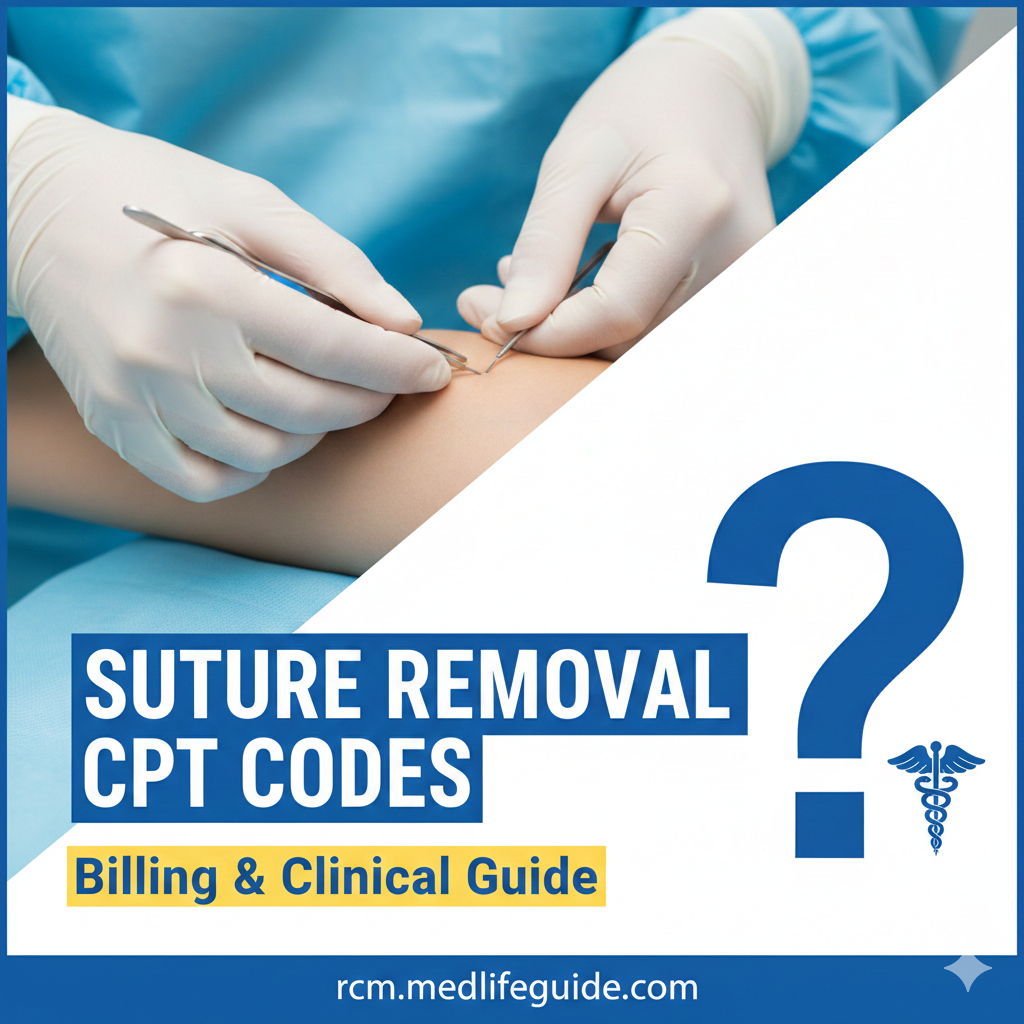
Suture removal CPT coding refers to the Current Procedural Terminology codes used to report the removal of sutures or staples after wound closure. Correct use of suture removal CPT codes is essential for accurate reimbursement, regulatory compliance, and clear clinical documentation.
Suture removal is often misunderstood in medical billing because it may be bundled into the original surgical procedure or reported separately depending on timing, provider, and clinical context. Errors commonly lead to claim denials, underbilling, or compliance risks.
This guide explains suture removal CPT codes, billing rules, clinical considerations, and documentation standards in clear U.S. medical English.
What Is Suture Removal in Clinical Practice
Suture removal is the planned extraction of non-absorbable sutures or staples once tissue healing is adequate. It is performed in outpatient clinics, urgent care centers, surgical follow-ups, and primary care settings.
Common Clinical Scenarios
- Post-surgical follow-up after dermatologic, orthopedic, or general surgery
- Laceration repair follow-up visits
- Staple removal after hospital discharge
- Wound checks with delayed healing
CPT Codes Used for Suture Removal
Primary Suture Removal CPT Codes
CPT 15850
- Description: Removal of sutures or staples not requiring anesthesia
- Use Case: Simple removal without sedation or anesthesia
- Typical Setting: Office or clinic visit
CPT 15851
- Description: Removal of sutures or staples requiring anesthesia
- Use Case: Removal requiring local, regional, or general anesthesia
- Typical Setting: Operating room or procedure suite
CPT Codes Commonly Confused With Suture Removal
| CPT Code | Description | Key Difference |
|---|---|---|
| 12001–12007 | Simple wound repair | Used for placement, not removal |
| 99202–99215 | E/M services | Used when removal is bundled |
| 99024 | Postoperative follow-up | No separate reimbursement |
Is Suture Removal Separately Billable?
Global Surgical Package Rules
Suture removal is often included in the global surgical package. This means no separate CPT code may be billed when:
- Removal occurs during the global period
- Removal is done by the same provider or practice
- Removal is routine and uncomplicated
When Suture Removal Is Billable
Suture removal CPT codes may be billed when:
- The provider did not perform the original procedure
- The global period has ended
- Removal is complex or requires anesthesia
- The patient presents solely for suture removal unrelated to prior care
Use of Evaluation and Management (E/M) Codes
In many cases, suture removal is billed using an E/M code instead of 15850 or 15851.
When E/M Is Appropriate
- Removal is minimal and routine
- A full assessment or wound evaluation is performed
- No separate procedural work is documented
Documentation Must Include
- Medical necessity for visit
- Wound assessment findings
- Infection status
- Patient counseling or aftercare
Modifiers Commonly Used With Suture Removal CPT
Modifier -24
- Used when suture removal is unrelated to a global surgical procedure
Modifier -25
- Used when a significant E/M service is performed on the same day
Modifier -79
- Used for unrelated procedures during the postoperative period
Incorrect modifier use is a frequent cause of claim rejection.
Documentation Requirements for Accurate Coding
Accurate documentation is required to support suture removal CPT billing.
Required Elements
- Type of sutures or staples removed
- Number of sutures or staples
- Location of wound
- Healing status
- Presence or absence of infection
- Anesthesia use (if any)
- Provider performing the service
Incomplete documentation may result in downcoding or denial.
Unique Clinical Takeaways
1. Patient Experience Impacts Coding Accuracy
Patients often schedule follow-up visits assuming suture removal is always covered separately. Clear communication before the visit reduces billing disputes and improves satisfaction. Clinics that educate patients on global period rules report fewer claim appeals and payment delays.
2. Delayed Healing Alters Coding Strategy
When wounds show delayed healing, dehiscence, or infection, suture removal may no longer be considered routine. In these cases, detailed documentation may justify separate procedural billing or higher-level E/M coding based on medical decision-making.
3. Provider Mismatch Is a Key Billing Trigger
Suture removal performed by a provider who did not place the sutures is one of the strongest justifications for separate CPT reporting. Billing teams should always verify original procedure ownership before claim submission to avoid missed reimbursement.
Common Billing Errors and How to Avoid Them
Frequent Errors
- Billing 15850 during a global period
- Missing anesthesia documentation for 15851
- Using E/M codes without medical necessity
- Incorrect modifier selection
Prevention Strategies
- Verify global periods before billing
- Audit postoperative visits regularly
- Train staff on modifier rules
- Use standardized wound care templates
Compliance and Audit Considerations
Suture removal is a common audit target due to high error rates. Payers review:
- Frequency of separate billing
- Consistency with global rules
- Documentation completeness
- Provider specialty patterns
Internal audits reduce compliance risk and revenue loss.
Coding Examples
Example 1: Routine Post-Surgical Removal
- Same surgeon
- Within global period
- No complications
Billing: Not separately billable
Example 2: Removal by Different Provider
- Urgent care removes sutures placed elsewhere
- No anesthesia
Billing: CPT 15850
Example 3: Complicated Removal With Anesthesia
- Scar tissue present
- Local anesthesia required
Billing: CPT 15851